
Heat-Resistant 3M Tape: Best Picks for Machines and Electronics
Compare heat-resistant 3M tape options like Polyimide Film Tape 5413 and Tape 92, with temperature ranges, uses for PCBs and machines, and how to choose.

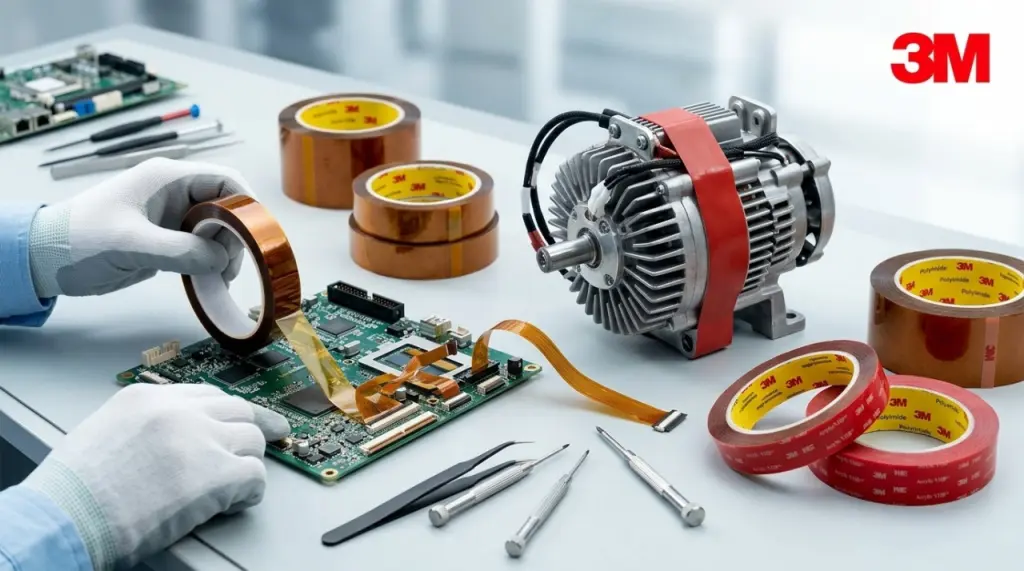
Heat-resistant 3M tape is a specialty adhesive tape used to help protect, cover, or insulate components in high-temperature industrial processes. For electronics, 3M Polyimide Film Tape 5413 can be considered for masking PCBs during soldering. The right product depends on temperature, exposure time, materials, function, and technical specifications.
Contents
- Key Takeaways
- Introduction
- What Is Heat-Resistant 3M Tape?
- Recommended Heat-Resistant 3M Tapes for Industry
- Comparison Table of Heat-Resistant 3M Tapes
- How to Choose the Right Heat-Resistant 3M Tape
- Tips for Using Heat-Resistant 3M Tape Correctly
- Mistakes to Avoid When Choosing Heat-Resistant Tape
- How to Find Heat-Resistant 3M Tape at SINARCS
- Citations and Technical References
- FAQ About Heat-Resistant 3M Tape
- Conclusion
Key Takeaways
- Heat-resistant tapes serve different functions: some are used for masking, others for electrical insulation or surface protection.
- 3M Polyimide Film Tape 5413 is designed for high-temperature applications, including masking during PCB soldering.
- 3M Polyimide Film Electrical Tape 92 is intended for certain electrical insulation applications and for masking in PCB assembly.
- Machine components need their own evaluation: consider operating temperature, vibration, surface material, and exposure to oil or chemicals.
- Check temperature resistance by product series: don't assume every 3M tape has the same temperature limit.
- Prepare the surface before applying: contamination can weaken the adhesive's ability to form a bond.
- Use the official technical documentation: match the product specifications to actual conditions before using it in a production process.
- Search for products through SINARCS: use the 3M catalog to find relevant options and confirm availability.
Introduction
High temperature is one of the challenges in manufacturing, electronics assembly, and machine component maintenance. The heat generated during soldering, heating processes, machine operation, or surface treatment can affect the performance of adhesive materials that were not designed for those conditions.
That is why companies need industrial adhesive tape that suits the characteristics of their process. One option worth considering is heat-resistant 3M tape, a category of adhesive tape with specifications intended for high-temperature use.
A tape isn't judged only on how well it withstands heat. Other factors also need to be checked, such as the type of backing, adhesive characteristics, bond strength, ease of removal, chemical resistance, and compatibility with the surface.
In electronics, for example, tape can be used to cover specific areas of a circuit board during soldering. In machine applications, the need may be surface protection or another technical function that has to match the product specifications.
This article covers recommended 3M tape series for heat-resistant use, what each one does, and how to choose the right product for industrial needs.
What Is Heat-Resistant 3M Tape?
Heat-resistant 3M tape is adhesive tape from 3M designed for specific applications with exposure to high temperatures. Products in this category can use different backing materials and adhesive systems depending on their intended purpose.
Some types use polyimide film with a silicone adhesive. This combination is used in certain applications that need dimensional stability and adhesive performance at high temperatures.
However, the term "heat resistant" does not mean every product can be used at the same temperature, for the same duration, and in the same environmental conditions. Heat resistance has to be judged by product model and its technical documentation.
A tape for PCB masking, for instance, is not automatically suitable for bonding load-bearing machine components. Likewise, a tape for electrical insulation should not be treated as a universal solution for all machine maintenance needs.
Core principle: choose 3M tape based on the application's function and the usage limits stated by the manufacturer, not just on a heat-resistance claim.
Recommended Heat-Resistant 3M Tapes for Industry
Below are several series worth considering, based on function and official 3M technical information. The suitability of each series still has to be verified against your application and its availability at SINARCS.
1. 3M Polyimide Film Tape 5413 for High-Temperature Processes
3M™ Polyimide Film Tape 5413 is a tape made of polyimide film with a silicone adhesive. It is designed for high-temperature applications, including solder masking in the assembly of printed circuit boards (PCBs).
Applications to consider include:
- Covering specific areas of a PCB during soldering.
- Protecting certain contacts or component areas from unwanted processing.
- Serving as a release surface in the fabrication of certain components that involves heating.
- Helping the tape keep its dimensional stability in suitable high-temperature applications.
According to 3M's technical documentation, Tape 5413 uses a polyimide film backing and a silicone adhesive. Its technical data lists a typical use range of -73°C to 260°C. This value should be understood as a product characteristic, not a guarantee that every application can run at that maximum temperature without limits on duration or conditions.
For production processes, check the latest technical data sheet and test under actual conditions, especially when the process involves repeated heating cycles or sensitive surfaces.
2. 3M Polyimide Film Electrical Tape 92 for Electrical Applications
3M™ Polyimide Film Electrical Tape 92 is a polyimide film tape with a silicone adhesive designed for certain electrical insulation needs. It is also used as a masking tape in PCB assembly.
Examples of uses to evaluate include:
- Insulation on certain parts of coils or electrical components.
- Use on harnesses and capacitors, according to product specifications.
- Masking during PCB soldering.
- Electrical applications that need a tape with particular thermal and electrical characteristics.
3M's official documentation lists a temperature range of 0°C to 180°C for Tape 92. That figure needs to be read in the context of the product specification and should not be equated directly with the temperature range of Tape 5413.
Important: electrical insulation applications must take into account voltage requirements, insulation thickness, environmental conditions, and the safety standards that apply. Don't choose a tape on heat resistance alone if its electrical requirements haven't been verified.
3. 3M High-Temperature Masking Tape for Manufacturing Processes
For certain manufacturing processes, the high-temperature masking tape category can be a good option when specific areas must be protected during heating or surface treatment.
Needs where it may be relevant include:
- Masking during coating or finishing of components.
- Protecting certain areas during production.
- Masking in PCB processing applications, according to product specifications.
- Processes that require the tape to be removed once a production stage is finished.
3M has a number of high-temperature tape series with different backings, adhesives, and functions. Choosing by category name alone is therefore not enough.
Before choosing, define the process temperature, exposure time, surface characteristics, and whether the tape must come off without leaving residue that would interfere with the next production stage.
4. 3M Tape for Machine Components: Choose by Function
On machine components, the need for heat-resistant tape can differ from electronics applications. Heat may come from a motor, a heating system, or a manufacturing process. Besides temperature, components can face vibration, friction, pressure, and exposure to oil and chemicals.
For that reason, not every polyimide tape or masking tape is suitable for direct use on a machine component that is running.
Before choosing a product, define the function you need:
- Temporary protection during production: evaluate masking tape that suits the process temperature.
- Electrical insulation: choose a product designed specifically for that electrical need.
- Surface protection: check material compatibility and removal characteristics.
- Joining components: use a product that specifically meets the bonding, load, and temperature requirements.
If the tape will be used near moving parts or parts that run hot during operation, make sure the installation doesn't create a risk of the tape coming loose, snagging, or interfering with equipment function.
Comparison Table of Heat-Resistant 3M Tapes
| Product or category | Main use | Temperature information from documentation | What to watch for |
|---|---|---|---|
| 3M Polyimide Film Tape 5413 | PCB masking and certain high-temperature applications | Typical use range of -73°C to 260°C | Exposure time, surface type, and removal requirements |
| 3M Polyimide Film Electrical Tape 92 | Certain electrical insulation and PCB masking | Listed temperature range of 0°C to 180°C | Electrical requirements and usage limits |
| Other 3M High-Temperature Masking Tapes | Masking in certain manufacturing processes | Depends on the series | Adhesive type, backing, temperature, and residue |
The temperature ranges in the table are not a direct comparison that guarantees one product is better than another. Each series has a different design purpose and test conditions. Always use the technical data sheet for the specific product before making a decision.
How to Choose the Right Heat-Resistant 3M Tape
To make sure the product fits your industrial needs, work through the following stages.
1. Determine the Temperature and Exposure Time
Record the temperature the tape will experience during the process. Distinguish between momentary temperature, peak temperature, and continuous operating temperature.
A tape suited to a short heating process is not necessarily right for continuous use at the same temperature. Check the temperature limits and usage instructions in the product's official documentation.
2. Identify the Tape's Function
Confirm whether the tape will be used for masking, electrical insulation, surface protection, or joining materials.
This difference matters because the required characteristics are not always the same. A masking tape has to consider ease of removal, while a tape for electrical insulation needs the appropriate electrical evaluation.
3. Check the Surface Material
Identify the materials the adhesive will touch, such as metal, plastic, coatings, or electronic components.
Surfaces with oil, dust, oxidation, or residue can reduce bond strength. Follow the manufacturer's surface preparation instructions and avoid cleaning agents that could damage components.
4. Evaluate Chemical and Environmental Resistance
In some processes, tape can be exposed to solvents, oil, moisture, or chemicals. Make sure the product's resistance to that exposure meets your needs.
Don't assume that every heat-resistant tape is automatically resistant to every chemical. Product performance has to be judged against the combination of usage conditions.
5. Check Removal and Residue Requirements
In masking, the tape usually has to be removed once a production stage is finished. An adhesive that leaves residue can add cleaning time and may affect the quality of the next process.
Check the product's removal information, the surface condition, and how long the tape stays in place. Run a trial first on the actual material to confirm the results you expect.
6. Test Before Mass Production
Testing under actual conditions helps confirm that the tape meets your needs. Use materials, temperatures, exposure times, and application methods that represent your production process.
Document the test results, including any change in shape, the condition of the adhesive after heating, residue, and performance after removal. For critical applications, involve the engineering or quality control team in the evaluation.
Tips for Using Heat-Resistant 3M Tape Correctly
Picking the right product has to go together with the right application method.
- Clean the surface. Make sure the surface meets the manufacturer's preparation instructions.
- Use the right size. The width and length of the tape should be enough to cover the required area without interfering with other components.
- Apply it neatly. Avoid folds or gaps that can reduce the effectiveness of the masking.
- Follow the recommended application conditions. Check the application temperature and pressure requirements, where applicable.
- Don't exceed the usage limits. Avoid use outside the product's temperature specifications and environmental conditions.
- Evaluate the results after the process. Check the surface condition, residue, and tape performance after heat exposure.
In electronics applications, make sure the tape doesn't cover areas that must stay exposed or interfere with the soldering process. In machine applications, make sure the tape isn't placed on moving parts or in locations that could endanger operators or equipment.
Mistakes to Avoid When Choosing Heat-Resistant Tape
Some common mistakes to avoid include:
- Assuming all heat-resistant tapes have the same specifications. Every series has different characteristics and usage limits.
- Looking only at the maximum temperature. Exposure time, surface type, and process conditions also affect the result.
- Using masking tape as a permanent adhesive without verification. The product must suit the function of the joint.
- Ignoring electrical insulation requirements. Heat resistance alone does not prove electrical suitability.
- Skipping testing. Testing is needed to confirm compatibility with the actual process and materials.
- Not checking the latest technical documentation. Specifications should refer to the correct product series.
Avoiding these mistakes helps companies make more measured procurement decisions and lowers the risk of a product mismatch in the production process.
How to Find Heat-Resistant 3M Tape at SINARCS
To find products that fit your industrial needs, visit the 3M product catalog at SINARCS.
When browsing the catalog, look for the product name or series that matches your application's function. If you need tape for PCB masking or a high-temperature process, have the temperature, exposure time, material, and removal requirements ready. If your need involves machine components or electrical insulation, also describe the operating conditions and technical requirements.
Before placing an order, make sure of the following:
- The series name and product specifications match your needs.
- The tape size suits the application process.
- Temperature resistance and duration of use have been verified.
- Product availability and purchase quantity have been confirmed.
- Technical documentation is available for internal evaluation.
If you can't find the series you need, contact the SINARCS team to ask about relevant 3M product options. Technical suitability must be confirmed against product specifications, not just the shared term "heat resistant."
Citations and Technical References
When choosing industrial tape, manufacturer information is an important basis for evaluating whether a product fits. 3M's official documentation states that Polyimide Film Tape 5413 is designed for high-temperature applications, including masking during PCB soldering, and that it uses polyimide film and a silicone adhesive.
For electrical insulation and PCB masking, 3M Polyimide Film Electrical Tape 92 has different characteristics and a different temperature range. This shows that products that look similar in function still need to be compared on their own specifications.
References you can use for further checking:
- 3M Polyimide Film Tape 5413: Product Information
- 3M Polyimide Film Tape 5413: Technical Data Sheet
- 3M Polyimide Film Electrical Tape 92: Product Information
- 3M High-Temperature Tapes: Product Selection Guide
Use these documents as technical references and make sure the version and specifications in force match the product you plan to buy.
FAQ About Heat-Resistant 3M Tape
1. Which 3M tape is suitable for high temperatures?
One product to consider is 3M Polyimide Film Tape 5413, which is designed for high-temperature applications such as PCB masking during soldering. The right choice, however, depends on temperature, exposure time, material, and the application's function.
2. Is 3M Polyimide Film Tape 5413 suitable for electronics?
Yes, Tape 5413 is designed for certain electronics applications, including PCB masking during soldering. Its suitability should be checked against your process requirements, materials, and the product's technical documentation.
3. What is the maximum temperature of 3M Tape 5413?
3M's technical documentation lists a typical use range of -73°C to 260°C for Tape 5413. This range is not a guarantee for all usage conditions. Check the latest technical data sheet and verify the duration and conditions of exposure before applying it.
4. What is the difference between 3M Tape 5413 and 3M Tape 92?
Tape 5413 is a polyimide film tape for high-temperature applications, including PCB masking. Tape 92 is a polyimide film electrical tape for certain electrical insulation applications and for PCB masking. The product documentation lists different temperature ranges, so the choice should follow the function and technical requirements of the application.
5. Can heat-resistant 3M tape be used on all machine components?
No. Suitability depends on the tape's function, operating temperature, surface material, load, vibration, and environmental exposure. A masking or electrical insulation tape is not automatically suitable for permanent bonding or for installation on moving machine parts.
6. How do I choose 3M tape for electronic components?
Define the process first, such as PCB masking, electrical insulation, or component protection. Then check the temperature, exposure time, electrical requirements, surface material, and ease of removal. Match all of these needs to the product specifications before use.
7. Does heat-resistant 3M tape leave residue when removed?
That depends on the tape series, the surface condition, temperature, how long the tape was in place, and the removal method. To reduce the risk of residue, choose a product that suits the process and test it on the actual material.
8. Where can I buy heat-resistant 3M tape in Indonesia?
You can start by searching the 3M catalog at SINARCS. Confirm the series, specifications, size, and availability with the SINARCS team before placing an order.
Conclusion
Heat-resistant 3M tape can help meet specific needs in manufacturing, electronics assembly, and industrial processes that involve heating. The choice of product, though, must rest on the application's function, temperature, exposure time, materials, and the technical requirements that apply.
3M Polyimide Film Tape 5413 can be considered for high-temperature applications such as PCB masking, while 3M Polyimide Film Electrical Tape 92 is intended for certain electrical insulation applications and PCB masking. The two have different characteristics, so they cannot be swapped without technical evaluation.
Before using a tape in production, check the official documentation, test it under actual conditions, and make sure the product matches your process needs. This helps a company reduce the risk of a mismatch and make better-directed procurement decisions.
Find Heat-Resistant 3M Tape at SINARCS
Need 3M tape for PCB masking, high-temperature manufacturing processes, or other technical uses?
Visit the 3M product catalog at SINARCS to find options relevant to your company's applications.
Prepare information about your process temperature, exposure time, material type, and the function you need the tape to serve, so your product search is better focused. You can also contact the SINARCS team to confirm the series, technical specifications, and product availability.
Choose 3M tape based on your application's needs and verified specifications so your production process stays under better control.