
Dental Implants: Benefits and How the Procedure Works
Dental implants are artificial titanium roots that fuse with the jawbone. Learn their benefits, who can get them and how they compare with dentures.

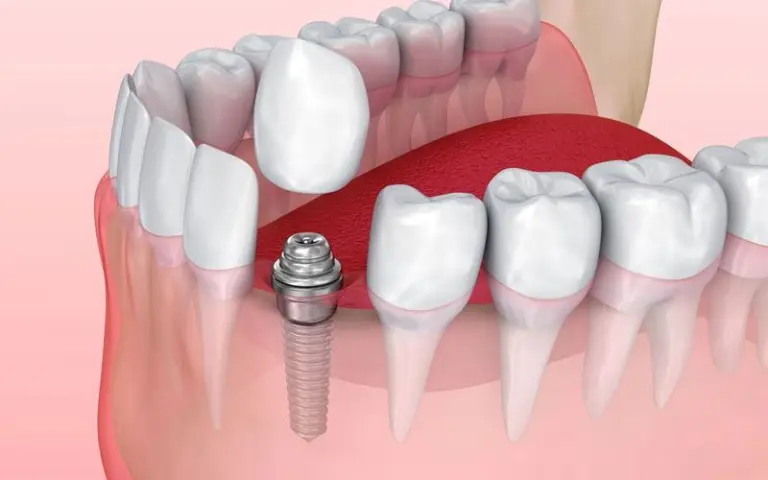
A dental implant is an artificial tooth root, usually made of titanium. Over a healing period of several months, the titanium root fuses with the jawbone. Once it has fused, the implant serves as the new tooth root. An artificial crown is then attached with an abutment, which connects the crown to the implant. Because the implant and jawbone become one, the implant stays in place for as long as the patient wears it.
Contents
What Are the Benefits of Dental Implants?
- Implants make it easier for patients to chew, while dentures usually shift when eating.
- Implants are more comfortable than dentures, because they are fixed more firmly in place.
- Implants do not change the wearer's appearance, because they feel like natural teeth.
- Implants are placed without changing or shifting the position of other teeth. This can improve dental and oral health compared with wearing dentures.
- Caring for and fitting implants is not as complicated as caring for dentures, because they need no adhesive and are not taken out and put back in like dentures.
- Implants usually last longer than dentures.
Who Can Get Dental Implants
A person can get an implant to replace a tooth root if they:
- Have more than one tooth that has come out or is missing.
- Have no particular condition that could affect bone growth.
- Do not want to wear dentures.
- Want to fix problems caused by missing teeth.
Getting an implant usually takes a lot of time and cannot be done in a single visit. Anyone who wants an implant must therefore commit to completing every stage of the process.
Dentures or Implants?
Compared with dentures, getting an implant takes considerably more time and money. So talk to a dentist before getting one, given how important the procedure is and that other options exist. An implant can be placed if you have conditions such as:
- Reluctance to wear dentures
- Replacing one or several missing teeth
- Preserving the structure and shape of the mouth after tooth loss
Note that the implant procedure suits people with no problems in the jawbone and with healthy bone. If you have a history of conditions such as radiation therapy to the head or diabetes, if you neglect your dental care, or if you smoke, see a dentist before getting an implant. Dental implants are more comfortable than dentures because they do not shift when you eat.