
ERP Modules Explained: Finance, HR, SCM and CRM
Learn what the four core ERP modules do: Finance, HR, Supply Chain (SCM) and CRM. See key sub-modules, business benefits and how to pick the right mix.

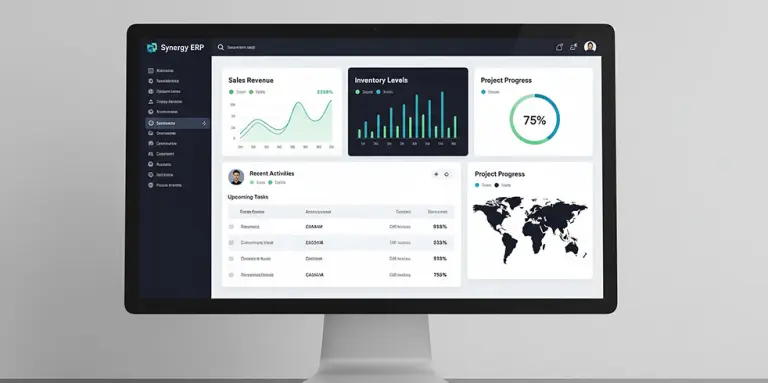
When a business owner decides to adopt ERP software (Enterprise Resource Planning), they are essentially choosing to bring every vital "organ" of the company into one body that works in harmony. But what exactly are those "organs"? Understanding the components, or modules, that make up an ERP system is the key to picking the right solution and getting the most value out of it for your business.
An ERP system is not one monolithic program. It is a suite of interconnected business applications. This modular design lets a company start with its most critical modules and add others as the business grows and its needs change. In 2025, four main modules are considered the pillars of almost every modern ERP implementation: Finance, Human Resource Management (HR), Supply Chain Management (SCM), and Customer Relationship Management (CRM). Let's break down what each of these modules does and what it offers.
A Business Orchestra in Harmony
Before we look at each module, picture an ERP system as a well-tuned orchestra. Each module is a skilled musician with their own instrument: Finance plays the steady bassline, SCM sets the rhythm of logistics, CRM sings the customer melody, and HR makes sure every musician is present and motivated. They could each play alone, but the real magic happens when they play together under one conductor (a centralized database), producing a symphony of efficiency. That integration is ERP's greatest strength.
1. The Finance Module (Financial Management): The Heart of the Company
This is the most fundamental module, and it is almost always the first one implemented. The finance module is the single source of truth for all of a company's financial data, giving full visibility into, and control over, the fiscal health of the business.
- Core function: Manages and automates all accounting and finance processes, from recording daily transactions to strategic reporting.
- Key sub-modules:
- General Ledger: The core of the finance module. It records all of the company's transactions in a structured chart of accounts.
- Accounts Payable (AP): Manages all supplier bills, from invoice entry and payment scheduling to the payment itself, making sure no payment is missed or made twice.
- Accounts Receivable (AR): Tracks all the money customers owe, automates invoice creation, and monitors overdue payments.
- Financial Reporting and Budgeting: Automatically generates vital financial statements such as the Income Statement, Balance Sheet, and Cash Flow Statement. It also supports budget preparation and monitoring.
- Business benefits: Gives real-time visibility into cash flow, speeds up the monthly close significantly, improves reporting accuracy, and helps ensure compliance with accounting standards (PSAK, Indonesia's financial accounting standards).
2. The Human Resource Management (HRM) Module: Managing the Most Valuable Asset
If finance is the heart, then employees are the soul. The Human Resource Management (HRM) module, often called Human Capital Management (HCM), brings together all the processes involved in managing the workforce.
- Core function: Automates administrative HR tasks and provides a central platform for all employee data, from hiring to retirement.
- Key sub-modules:
- Employee Database: Stores all personal and professional employee information securely in one place.
- Payroll Management: Automates the calculation of salaries, allowances, income tax withholding (PPh 21), and BPJS (Indonesia's national health and employment insurance contributions), reducing the risk of costly manual errors.
- Attendance and Leave Management: Tracks employee attendance and simplifies leave requests and approvals online.
- Performance Appraisal and Development: Supports performance reviews, goal setting, and the planning of training programs for employee development.
- Business benefits: Sharply reduces the administrative workload of the HR team, improves payroll accuracy, empowers employees with self-service access (for example, to view payslips or request leave), and supplies data for strategic talent decisions.
3. The Supply Chain Management (SCM) Module: Controlling the Flow of Goods and Services
For companies in manufacturing, distribution, or retail, the SCM module is the engine of day-to-day operations. It manages the entire product life cycle, from sourcing raw materials from suppliers to delivering the finished product to the end customer.
- Core function: Optimizes, and provides visibility into, all inventory movement and order fulfillment processes.
- Key sub-modules:
- Inventory Management: Gives a real-time picture of stock quantities, storage locations, and value. This helps prevent overstocking (idle capital) and understocking (lost sales).
- Procurement Management: Automates the procure-to-pay process, from creating a purchase request and approving it to issuing a purchase order to the supplier.
- Warehouse Management: Optimizes warehouse layout and the picking, packing, and shipping of goods.
- Order Management: Tracks customer orders from the moment they are received until they are shipped and invoiced.
- Business benefits: According to various case studies, an integrated SCM implementation can cut inventory costs by 15-25%, improve order fulfillment accuracy, and shorten the cycle from order to delivery.
4. The Customer Relationship Management (CRM) Module: Winning and Keeping Customers
The CRM module focuses on the front-office side of the business. Its purpose is to manage every interaction with customers and prospects in order to build stronger relationships, drive sales, and increase loyalty.
- Core function: Provides a 360-degree view of every customer and automates sales, marketing, and service processes.
- Key sub-modules:
- Contact and Lead Management: A central database for all information about customers and potential customers.
- Sales Force Automation (SFA): Helps the sales team manage their pipeline, track opportunities, and automate administrative tasks.
- Customer Service: Manages complaint or request tickets from customers, making sure none are missed and all are handled on time.
- Marketing Analytics: Analyzes customer data to build more targeted and effective marketing campaigns.
- Business benefits: Better customer retention, shorter sales cycles, higher sales team productivity, and a stronger ability to run upselling and cross-selling effectively.
Conclusion: Building the Right Foundation
These four modules (Finance, HR, SCM, and CRM) form the foundation of most modern ERP systems. The beauty of the modular approach is that your company can start with its biggest pain point today. Is it chaos in the finance department? Or inefficiency in inventory management? You can begin there. The real value, however, only opens up when the modules work together, share data smoothly, and give you a complete, integrated picture of the business. Choosing the right combination of ERP software modules is a strategic step that will shape your efficiency and growth for years to come. For that, you need guidance from an experienced partner who can help you analyze your unique needs. The expert consulting team at Metrodata is ready to help you map your business requirements and recommend an ERP solution with the modules best suited to your long-term success.