3 Business Data Problems You Can Solve With CRM Software
CRM software integrates and automates customer service across sales and marketing. Learn which data problems it solves and how to choose the right one.

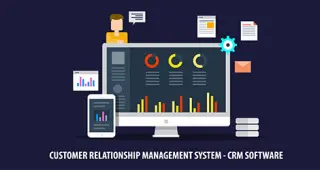
CRM (customer relationship management) software is information technology used to integrate and automate customer service processes in sales, marketing and the support of products or services connected to a company. The purpose of CRM is to build a close relationship between a company and each of its customers so they become loyal to it. The problem is what happens when that customer data has problems. The company will find it hard to build a relationship with those customers.
Fortunately, technology is advancing so fast that businesses can use software to get the most out of their performance, especially in dealing with customer data problems that can arise at any time. One piece of software every business should use is CRM. With CRM software, a business's data processing problems can be solved. Here are some data problems that CRM can solve:
Contents
Disorganized Data
Disorganized data can cause sales to fail and keep results from reaching their maximum. Data becomes disorganized when there is too much of it, when it is redundant (duplicated), and when you cannot tell quality data from poor data. The company is also left confused about where to start processing its sales data, which takes a lot of time.
Poor Data Management
Another data problem that CRM software can solve is poor data management. In the digital era, managing data by hand is not enough, and a more automated process is needed. One example of an automated process CRM can handle is creating and sending offers to customers faster and more accurately.
Access to Sales and Marketing Data
Without software, accessing sales and marketing data takes a long time. With CRM software, a company can access its sales data completely, quickly and accurately. CRM also makes it easier for the marketing team to find marketing data, so armed with that data the company can build strategies that are more efficient and targeted to its needs. From the data, the company can see how well earlier strategies worked, which should help it repeat past sales successes.
Choosing the Right CRM
Not every CRM suits every company. So to solve a company's data problems properly, it is important to choose the right application. To avoid a wrong pick, the company needs to know what criteria a good CRM should meet. The first criterion is to choose CRM software or an application that is easy to use. However good an application is, if it takes a long time to use, it will still be ineffective, especially if it comes with long, time-consuming training.
Second, choose a system whose updates do not disrupt performance. No system or technology is perfect, and CRM is no exception. To deal with that imperfection, system updates are always needed. So that important work is not held up, the company should choose a CRM that does not disrupt users' work when it is updated.
The last criterion is security. To keep customer data, purchase history and the like secure, the company should choose a credible, experienced CRM software vendor. Look at who its clients have been as well: the more satisfied clients a vendor has, the better the vendor.
Never underestimate data in a business. Without it, a business will not grow as hoped. If your company struggles to process data to get the most from sales, that is a sign it is time to implement CRM software. With it, the company can update data, maintain data and store data more securely, all more easily.